Published: April 2026 | Category: Real Estate Investment, Lagos Property Market
Introduction: The Sleeping Giant Has Woken Up
There is a land revolution happening on the eastern fringes of Lagos, and if you already own a piece of it — congratulations. If you don’t, the clock is ticking.9 If you’ve listened to conversations about smart real estate in Nigeria recently, one name consistently emerges: Ibeju-Lekki. Once a quiet, sand-filled expanse, it has rapidly transformed into the epicenter of Africa’s most ambitious economic projects.
The numbers speak for themselves. 1Land bought in 2018 for ₦1M is now worth ₦10M–₦15M in some locations. That’s a 10x–15x return in under a decade — and the catalysts driving that growth haven’t even fully kicked in yet.
As we inch toward 2027, a convergence of mega-infrastructure, government policy, private investment, and surging demand is setting the stage for another explosive appreciation cycle. Here’s everything you need to know.
📍 Where Exactly Is Ibeju-Lekki?
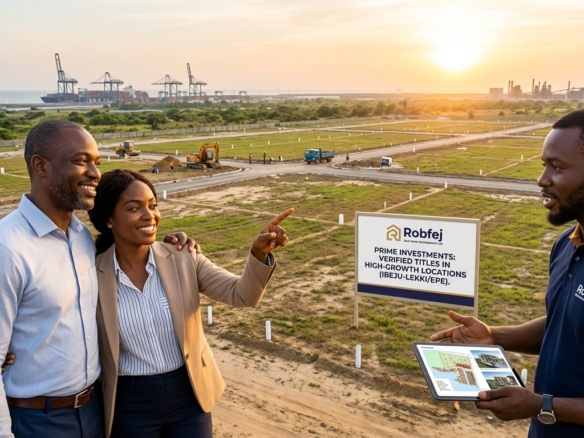
8 Ibeju-Lekki is a rapidly developing Local Government Area (LGA) in Lagos State, positioned along the eastern stretch of the Lekki Peninsula. Often referred to as the “new Lagos,” it forms a strategic extension of the Lekki development corridor, which includes Lekki Phase 1, Chevron Drive, and Ajah. With urban growth moving eastward, Ibeju-Lekki has become a focal point for economic, social, and infrastructural expansion. 2 Ibeju-Lekki sits along the Lekki-Epe Expressway, a major corridor connecting Victoria Island, Lekki, Ajah, and Epe — making it easily accessible and highly attractive to developers, investors, and future residents.
🚀 The 5 Big Reasons Land Values Are About to Surge
1. 🏗️ The Lekki Deep Seaport — Nigeria’s New #1 Port
This is perhaps the single most powerful driver of land value in Ibeju-Lekki today.27 Fully operational since April 1, 2023, Lekki Deep Sea Port is a landmark multi-purpose deep sea port in the Lagos Free Zone. As Nigeria’s largest seaport and one of the largest in West Africa, this state-of-the-art facility is a linchpin for regional maritime activities.
The port’s growth trajectory has been breathtaking. 30In 2023, when it began operations, the port processed just 54,289 TEUs. That figure had already grown to 222,000 in just six months of 2025, with a full-year target of 500,000 TEUs — reflecting a 394.83% increase from its 2023 throughput.
By 2025, the results were undeniable. 22Lekki Deep Sea Port emerged as Nigeria’s top port in terms of cargo handled in 2025, a disclosure made by the Managing Director of the Nigerian Ports Authority (NPA), Abubakar Dantsoho, with the report showing Lekki’s performance reflecting its growing importance as a hub for both imports and exports, surpassing older ports such as Onne Port and Apapa Port. In fact, 22Lekki Deep Sea Port handled the largest share of cargo among all Nigerian ports, accounting for 40.6% of total national throughput.
To further connect the port to the wider region, 29the Federal Government is building a 50km access road featuring two 25km carriageways, each with three lanes, including major bridges — a project designed to enhance connectivity to the Lekki Deep Seaport and support regional transport efficiency. 29The Federal Government has paid 30% of the project cost, while China Harbour Engineering Company (CHEC) will fund the remaining 70% through an EPC+F arrangement, with the loan to be repaid via tolls once the road becomes operational.
2. 🛣️ The Lagos-Calabar Coastal Highway — The Game-Changing Road
31 The Lagos-Calabar Coastal Highway is a 700-kilometer project under development by the Federal Ministry of Works, planned to run from Victoria Island, Lagos to Calabar, Cross River State.
In a landmark development for Ibeju-Lekki specifically, 37the Federal Government on Friday, December 12, 2025, temporarily opened the 47.47-kilometre Section One, Phase One of the Lagos–Calabar Coastal Highway, with the Minister of Works, Senator Dave Umahi, describing the project as a game changer for national infrastructure development.
Critically, 37the opened section runs directly from Ahmadu Bello Way in Victoria Island to Eleko in Ibeju-Lekki. This means Ibeju-Lekki is now directly connected to Lagos Island by a brand-new, world-class road. 37The opening has already cut travel times by over 50 minutes to one hour for residents, who are happy to divert from the ever-busy and traffic-prone Lekki-Epe Expressway.
The momentum is not stopping. 36Nigeria’s flagship Lagos-Calabar Coastal Highway has attracted overwhelming investor confidence, recording an oversubscription of more than $100 million. Phase 1, Section 2 is already underway — 35spanning approximately 55.7 kilometres, linking Eleko in Lekki to Ode-Omi.
3. 🏭 The Dangote Refinery & Lekki Free Trade Zone — An Economic Powerhouse
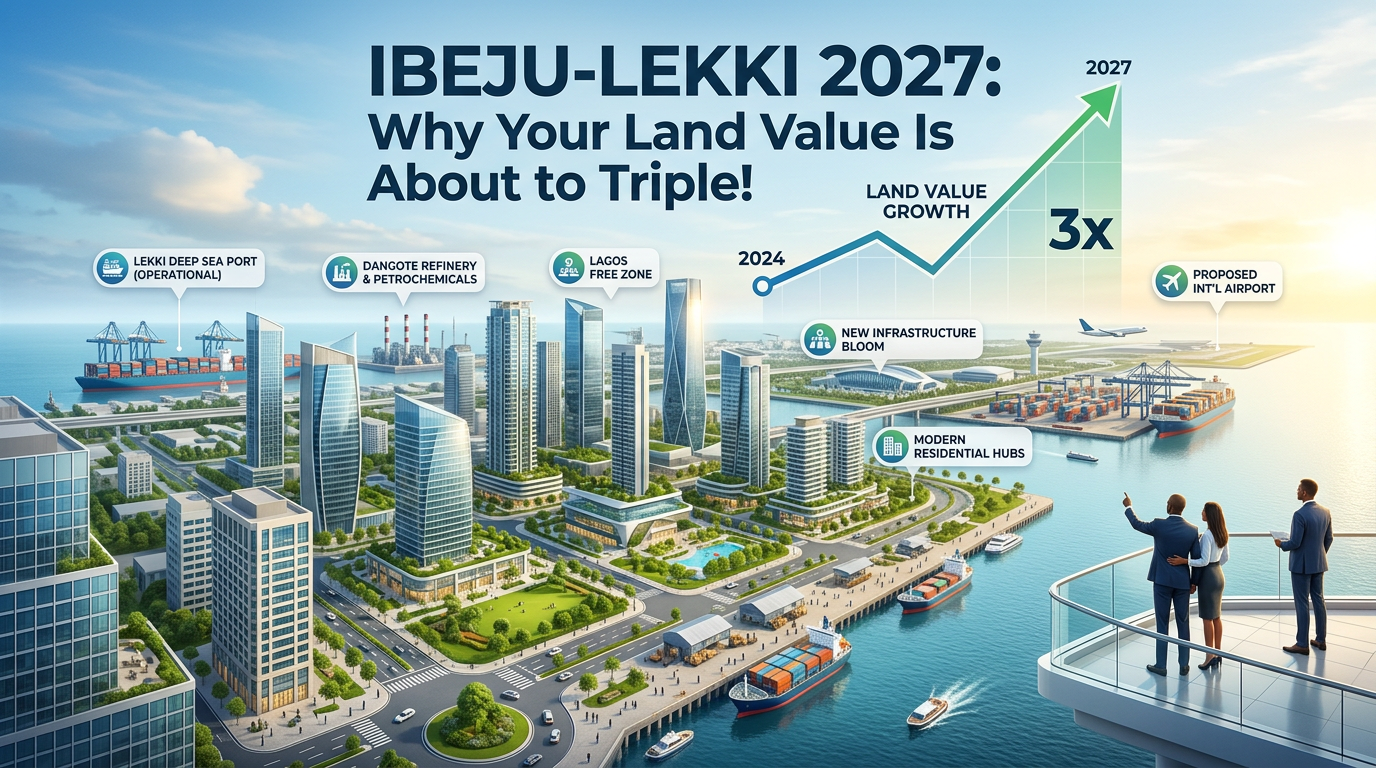
4 The Dangote Refinery & Petrochemical Complex is a multi-billion-dollar game-changer attracting industries and creating tens of thousands of jobs, driving demand for housing and commercial spaces. 6 The area is surrounded by multi-billion-dollar projects transforming it into an economic powerhouse, including the Lekki Deep Sea Port — one of the largest ports in West Africa, boosting trade and logistics; the Dangote Refinery — a massive industrial complex creating thousands of jobs and driving up demand for housing; and the Lekki Free Trade Zone — a government-backed commercial hub for international and local businesses. 1 Ibeju-Lekki is home to several billion-dollar infrastructure projects, and these developments are expected to create over 300,000 jobs and transform the area into Nigeria’s next industrial and commercial hub. 3 According to the Lagos State Bureau of Statistics, Ibeju-Lekki received ₦450 billion in private sector real estate investment in 2025 alone — more than any Lagos LGA except Eti-Osa (Lekki). Major companies like Dangote, China Harbour Engineering, and Pan-Atlantic University are betting billions on this area’s future.
4. ✈️ The Proposed Lekki International Airport
9 The New Lekki-Epe International Airport is slated to handle millions of passengers annually. This airport will unlock unparalleled connectivity for business and tourism, positioning Ibeju-Lekki as a major gateway into Nigeria.
A new bridge is already being built in anticipation of the airport’s development. 18Governor Sanwo-Olu mentioned a new bridge being built from Sangotedo to the future Lekki airport area, which will further open up the community.
Estates are already springing up around the airport zone. 7The “Lekki Aviation Town” estate, for instance, is located directly opposite the proposed Lekki International Airport and situated within the Yegunda Government Resettlement Zone, offering access to the heart of future development in Lagos.
5. 🏙️ The Ibeju-Lekki Model City Plan (2024–2044)
Perhaps the most definitive signal of this area’s trajectory is the formal government commitment to transform it into a global city.13 The Lagos State Government has unveiled an ambitious 20-year development plan (2024–2044) aimed at transforming the Ibeju-Lekki area into a dynamic, globally competitive urban hub. The plan focuses on enhancing sectors such as tourism, housing, agriculture, and industrial development to drive economic growth and improve the quality of life for residents. 16 According to Commissioner Dr. Oluyinka Olumide, “the 20-year plan aims to create a sustainable, flexible, and dynamic global community, enhancing the area’s economic potential in Agriculture, Tourism, Blue and Border Economy, and Marine activities.” 13 The plan aligns with Governor Babajide Sanwo-Olu’s T.H.E.M.E.S+ Agenda and integrates major infrastructural projects in the area, such as the Dangote Refinery, Lekki Free Trade Zone, Lekki Deep Seaport, and Alaro City. Future projects like the proposed Lekki International Airport, Green-Line Rail Project, and the Lagos-Calabar Coastal Highway are also key to the transformation. 11 The plan also outlines enhanced road networks, affordable housing projects, and urban renewal initiatives that will improve living standards.
📊 What the Data Says: The Investment Window Is Now
3 Historical patterns from Lekki’s own development (2005–2015) and global infrastructure-driven appreciation cycles suggest the current period (2024–2027) represents the optimal entry window before prices surge 40–100% upon infrastructure completion. 2 With both government and private sector investments pouring into the region, Ibeju-Lekki is undergoing rapid urbanization. New roads, estates, schools, and shopping centers are springing up across the corridor. 5 Lagos State has classified Ibeju-Lekki as a priority development zone. Roads, drainage, power, and transportation networks are under active construction. 3 Properties within 3km of the coastal highway or major employment centers (Dangote, Free Trade Zone) will appreciate faster than remote interior plots.
🗺️ Where to Buy in Ibeju-Lekki Right Now
Not all land in Ibeju-Lekki is equal. Here’s a breakdown based on investment goals:
- 🏠 Residential Use: 6Choose areas like Abijo, Lakowe, or Eleko, which offer existing infrastructure and community access.
- 🏢 Commercial/Industrial Use: 6Focus on zones near the Free Trade Zone, Akodo, or Eleko Junction, where business demand is rising.
- 💰 Land Banking (Long-Term): 6Consider emerging areas like Elerangbe, Ibeju-Agbe, or Okun Ise, where land is still cheap but projected to appreciate.
⚠️ A Word of Caution: Invest Smart
The opportunity is real — but so are the risks if you’re not careful.6 Land in Ibeju-Lekki is safe to buy, but only when due diligence is done correctly. While the area offers huge investment potential, there are risks if buyers fail to verify the title documents, ownership history, or government approvals.
Here are the key rules to follow before investing:
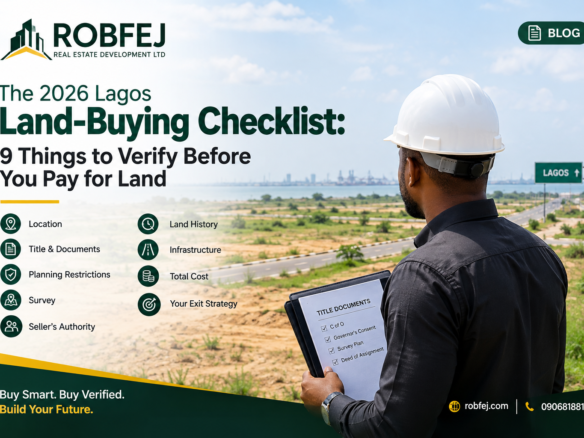
- 6 Insist on a verifiable title such as Excision, Gazette, C of O, or Governor’s Consent, and conduct a land search at the Lagos State Land Registry to confirm legal status.
- 6 Buy from reputable developers or estates with a track record. Avoid unverified family lands (omo-onile) without clear documentation.
- 6 Work with a certified real estate agent, lawyer, or surveyor to ensure that the transaction is secure and free from future disputes.
🔑 Final Verdict: The Train Is Moving — Are You On It?
1 Despite rising prices, Ibeju-Lekki remains one of the most promising investment zones in Lagos. Land bought in 2018 for ₦1M is now worth ₦10M–₦15M in some locations. With major infrastructure now operational and more developments on the way, land values are expected to continue rising steadily over the next 5–10 years.
The Lekki Deep Seaport is fully operational and growing. The Lagos-Calabar Coastal Highway has opened its first section to Eleko. The Dangote Refinery is running. The 20-year Model City Plan is ratified. The international airport is on the horizon. Job creation in the hundreds of thousands is underway.
Everything that needed to happen for Ibeju-Lekki’s property market to explode is either happening right now or is just around the corner. The window before 2027 is arguably the last chance to buy at pre-boom prices.1 The price of land in Ibeju-Lekki will continue to rise as infrastructure develops. If you’re serious about owning land in Lagos with strong growth potential, the time to act is now.
⚠️ Disclaimer: This blog post is for informational purposes only and should not be taken as financial or legal advice. Always consult a licensed real estate professional, surveyor, and legal adviser before making any property investment decisions. Real estate values can go up as well as down, and past performance does not guarantee future results.